
40 YEARS OF EXPERIENCE
Mr. Asabananda Bhattacharyya
Chairman
Experience in Rural Development
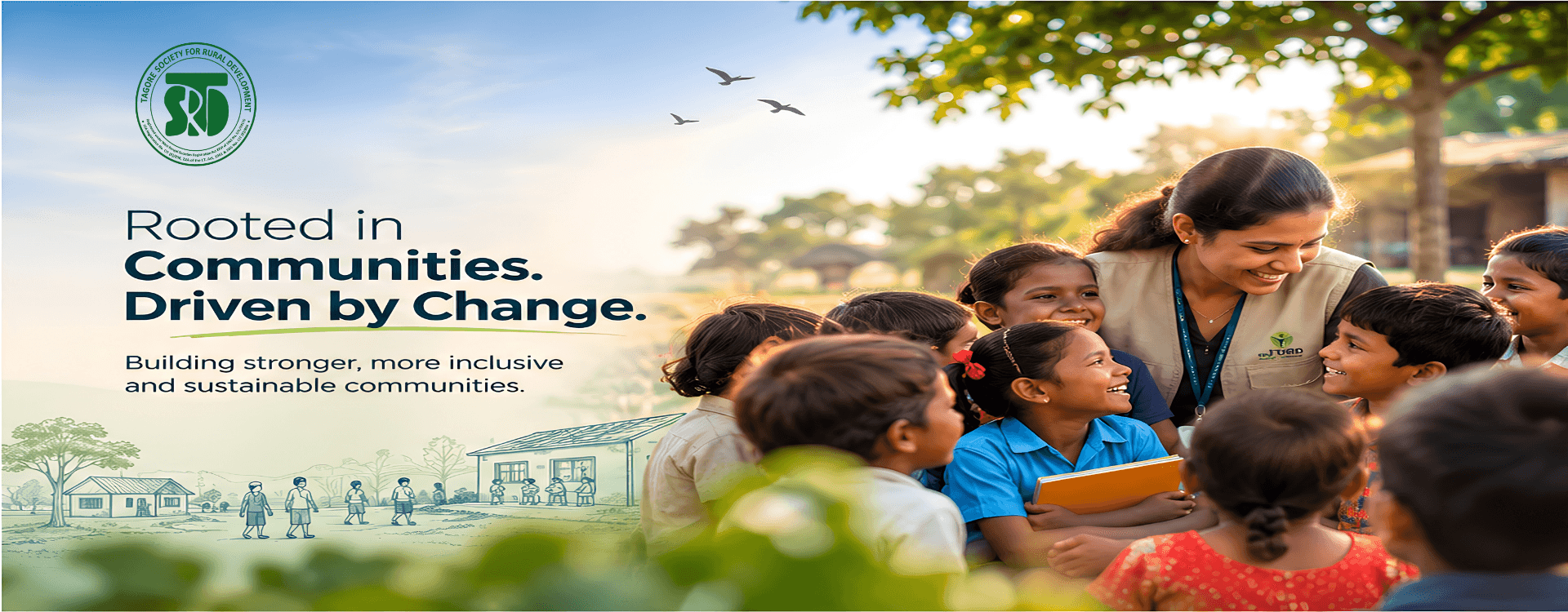
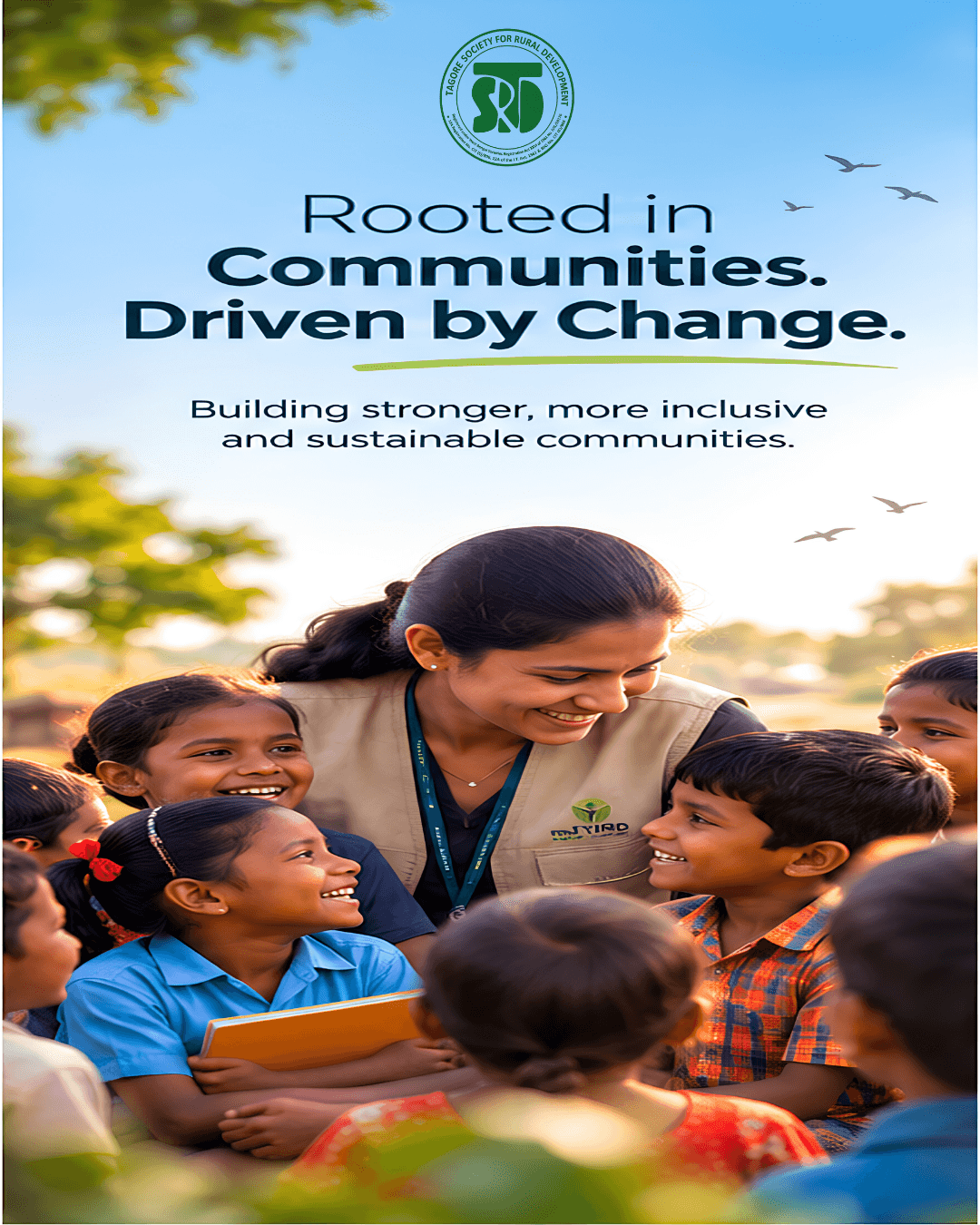
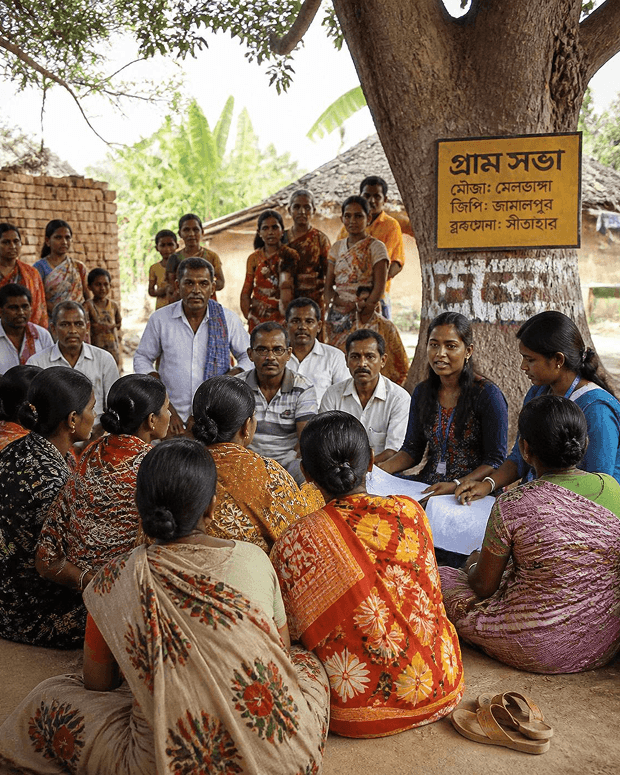
We believe in building self-reliant and inclusive villages through community participation and collective growth.
Secretary, TSRD
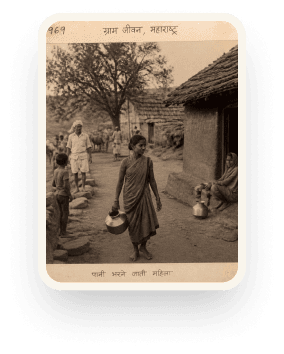
India's strength has always been deeply rooted in its villages. Yet rural communities often face social and economic inequalities that limit access to resources, opportunities and dignified livelihoods.
Guided by the philosophy of Antodaya through Sarvodaya, Tagore Society for Rural Development was established in 1969 under the leadership of Loknayak Jayaprakash Narayan and Revolutionary Pannalal Dasgupta.
TSRD began its development journey through Food for Work and small irrigation initiatives. Over the decades, this work evolved into a comprehensive approach to rural development—bringing together livelihood promotion, agriculture, natural resource management, women empowerment, education, health, environmental action and community institution building.
Through every stage of this journey, one principle has remained constant: rural development must be participatory, inclusive and ultimately enable communities to become self-reliant.
DIGNITY
Creating development opportunities that respect people, their identity, culture and aspirations.
SELF-RELIANCE
Strengthening local knowledge, skills, resources and institutions so communities can shape their own future.
COLLECTIVE GROWTH
Encouraging people to participate, collaborate and take ownership of the development process.
TSRD works towards the holistic development of marginalized rural communities through participatory and community-driven programmes. Our interventions respond to local needs while creating opportunities for sustainable and long-term change.
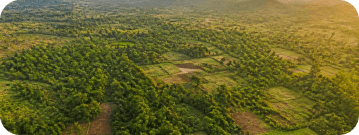
Creating sustainable livelihood and agricultural opportunities for rural communities.
Strengthening women’s participation, leadership and economic opportunities.
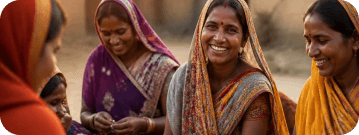

Building education, practical skills and livelihood capabilities in rural communities.
Building stronger community preparedness, resilience and disaster response.

Improving community health, hygiene, sanitation and awareness.
Helping vulnerable children move towards safer and more secure futures.
Promoting sustainable environmental and natural resource management.
Strengthening community institutions, collective decision-making and local ownership.
TSRD’s vision is rooted in the Gandhian development doctrine and Rabindranath Tagore’s call:
“Bring back rural life in all its completeness by making the villagers self-reliant and self-respectful.”
We envision empowered rural communities where people have the knowledge, opportunities, resources and collective strength to participate meaningfully in their own development.
Create self-reliant rural communities through a participatory approach.
Build on India’s rich tradition and heritage while enabling the efficient use of modern resources.
Create opportunities for disadvantaged communities, especially women, to take ownership of activities that shape their future.
Strengthen awareness and understanding of the social, economic and political forces that contribute to poverty and deprivation.
Keep women’s empowerment at the heart of sustainable rural transformation.
TSRD works to increase the economic participation of poor and sub-marginal families through improved agriculture and alternative livelihoods; strengthen capacities through awareness and skill formation; improve the health of rural communities, particularly women and children; expand education opportunities; empower women; build environmental awareness; and mobilize communities for improved disaster management.
YEARS OF RURAL DEVELOPMENT
DISTRICTS
BLOCKS
VILLAGES
TSRD is governed by a Board of Management, the apex body responsible for the governance and policy direction of the organisation.
The Board comprises experienced social workers and development professionals committed to guiding TSRD towards inclusive and sustainable rural development. The Secretary serves as the Chief Functionary and oversees the organisation's day-to-day affairs and programme direction.
40 YEARS OF EXPERIENCE
Chairman
Experience in Rural Development

21 YEARS OF EXPERIENCE
Secretary / Chief Functionary
Experience in Rural Development

30 YEARS OF EXPERIENCE
Joint Secretary
Experience in Rural Development

25 YEARS OF EXPERIENCE
Treasurer
Experience in Rural Development
A team driven by purpose & impact.
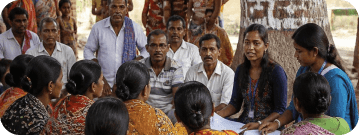
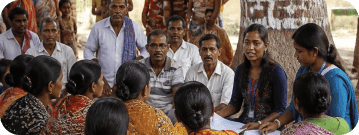
TSRD follows a participatory and community-centred development methodology. Communities are involved from identifying challenges and planning interventions to implementation, monitoring and long-term management.
Gather ground-level information through community meetings, discussions and local consultations.
Identify problems and opportunities together with communities, experts and stakeholders.
Enable communities to participate meaningfully in decisions that affect their lives.
Strengthen community institutions and connect them with relevant resource agencies.
Execute programmes through active participation with technical support from TSRD.
Strengthen knowledge, skills, leadership and institutional capabilities.
Create successful development models that can be replicated across communities.
Build linkages with institutions and government departments to leverage resources.
Use continuous monitoring, evaluation and learning to improve development outcomes.
Across West Bengal and Jharkhand, TSRD's community-centred programmes have generated measurable outcomes in livelihoods, women empowerment, natural resource management, child protection and community resilience.

Women Self-Help Groups Promoted
Building stronger community institutions and expanding opportunities for women’s participation and economic empowerment.
INSPIRED IMPACT

Saplings Planted
Including mangrove plantations in the environmentally sensitive Sundarban region.
INSPIRED IMPACT
Hectares Treated
Wasteland and fallow land treated under the Usharmukti Project through MGNREGA convergence.
INSPIRED IMPACT
Women Farmers
Promoted as Lakhpati Kisan and supported through successful Farmer Producer Companies.
INSPIRED IMPACT

Child Labourers Rescued
Rescued in Dakshin Dinajpur and mainstreamed into formal education and vocational training.
INSPIRED IMPACT

People Supported During Emergencies
Relief and emergency support provided during COVID-19 and natural disasters in the Sundarbans.
INSPIRED IMPACT
1,725 families benefited through watershed development projects supported by NABARD-RIDF in East Singhbhum.
800 ultra-poor families were supported towards sustainable livelihoods, alongside educational support for 247 students.
525 vulnerable children including victims of trafficking, child labour, abuse and child marriage, were rescued and rehabilitated.
TSRD-supported Producer Group was recognised as the Best Producer Group in Jharkhand in 2022, while Gram Panchayats supported through natural resource management initiatives received national recognition.
TSRD's foundation was shaped by leaders who believed that meaningful rural transformation must be built on Sarvodaya, self-reliance, social justice and community participation.
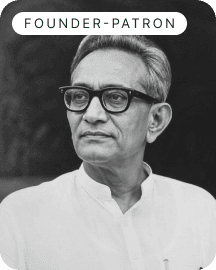
FIRST CHAIRMAN · TSRD · 1969
A renowned freedom fighter, social reformer and socialist leader, Loknayak Jayaprakash Narayan was a key figure in the Quit India Movement and the Sarvodaya movement. As the first Chairman of TSRD in 1969, he helped shape the organisation’s vision of empowering marginalized rural communities through self-reliance, participation and sustainable development.
ARCHIVAL · TSRD INSTITUTIONAL
MEMORY
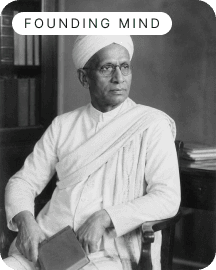
FOUNDER SECRETARY · TSRD
Freedom fighter, social activist and visionary rural development leader Pannalal Dasgupta served as the Founder Secretary of TSRD. He played a pivotal role in building the organisation and establishing its people-centred approach based on the principles of Antodaya and Sarvodaya. His commitment to rural empowerment and social transformation continues to inspire TSRD’s work today.
ARCHIVAL · TSRD INSTITUTIONAL
MEMORY
From small irrigation and Food for Work initiatives to comprehensive rural development programmes, TSRD's journey reflects continuous learning, adaptation and community partnership.
TSRD began its development journey through relief-oriented Food for Work initiatives and rural development interventions. Bolpur became one of the organisation’s earliest project locations.
TSRD expanded into comprehensive rural development programmes focused on livelihoods and community participation. Projects including Simulpur, Rangabelia in the Sundarbans and Tapan became part of the organisation’s growing development footprint.
TSRD expanded its programmes into Jharkhand and Odisha, introducing initiatives in irrigation, sanitation, non-formal education, adult education, plantation and livelihood development. Projects at Patamda and Maheshpur were initiated during this period.
International development partnerships helped TSRD expand programme coverage. Large-scale plantation programmes gained momentum, and the promotion of Women Self-Help Groups became an important part of TSRD’s community development strategy. The organisation ultimately promoted more than 6,000 SHGs across its project units.
TSRD strengthened collaboration with Central and State Government departments and Indian development agencies. A decentralised operational model became one of the organisation’s defining characteristics, enabling project units to respond more effectively to local needs.
Programmes increasingly focused on agriculture and allied value chains, watershed development, entrepreneurship, women farmers, Farmer Producer Organisations and large-scale livelihood development. Initiatives included tomato and poultry value chains, Tasar sericulture, Lakhpati Kisan, watershed development and Mahila Kisan Sashaktikaran Pariyojana.
TSRD continues to strengthen community institutions, sustainable livelihoods, natural resource management, child protection, education, environmental action and disaster resilience while expanding its development footprint.
Our values define not only what we seek to achieve, but also how we engage with communities, partners and one another.
We believe in creating opportunities that contribute to a more equitable and self-dependent society.
We place social inclusion, justice and respect for community culture and ethnicity at the centre of our work.
We remain committed to openness, responsibility and truthful engagement with communities and stakeholders.
We build relationships based on mutual confidence and respect between communities and the TSRD team.
We seek to understand the realities and vulnerabilities of communities before designing solutions.
We create spaces for learning, exchanging experiences and recognising the skills, competencies and strengths of people and institutions.
TSRD's livelihood programmes connect people, natural resources, community institutions, skills and enterprise to create stronger and more resilient rural economies.

Promoting Women SHGs, Producer Groups, Village Development Committees and Farmer Producer Organisations.

Strengthening water resources, irrigation infrastructure, agriculture productivity and market-linked value chains.

Promoting agricultural practices designed to improve productivity while supporting long-term sustainability.

Creating livelihood opportunities through poultry, goatery and large animals.

Promoting livelihood opportunities including Tasar sericulture and honey production.

Building practical skills and supporting entrepreneurship and alternative livelihood opportunities.

Supporting fisheries as a sustainable livelihood opportunity for rural households.
TSRD works across some of the most remote rural communities of West Bengal and Jharkhand, following a decentralised approach that enables programmes to respond to local needs and opportunities.
13
Districts124
Blocks5,878
VillagesDakshin Dinajpur, Paschim Medinipur, Birbhum, Purulia, Alipurduar, Bardhaman, Coochbehar, Howrah, Malda, Uttar Dinajpur, Purba Medinipur, South 24 Parganas and North 24 Parganas.
2
Districts7
Blocks539
VillagesEast Singhbhum and Pakur, including Patamda, Boram, Gurabanda, Ghatshila, Maheshpur, Amrapara and Hiranpur.
TSRD's decentralised operational model actively involves local communities, Gram Panchayats, community institutions and other stakeholders in planning and implementation.
TSRD follows a decentralised and community-centred operating model. Programmes are designed around active participation from local communities, Gram Panchayats, community institutions and relevant stakeholders.
Village-level institutions play an important role in planning, implementation, infrastructure management and monitoring.
TSRD places strong emphasis on awareness generation, capacity building, leadership development and convergence with government departments and resource agencies.
Local communities, Gram Panchayats and community institutions actively participate in identifying needs, priorities and development opportunities.
Village-level institutions are strengthened to support planning, implementation, infrastructure management and community monitoring.
Awareness generation, practical capacity building and leadership development help communities take greater ownership of local development.
TSRD connects communities with government departments, institutions and resource agencies so development can continue beyond individual projects.
By strengthening local institutions and enabling communities to participate in decisions, TSRD works towards development that can continue beyond the duration of individual projects.
Sustainable rural transformation cannot happen in isolation. Over the years, TSRD has collaborated with government departments, development institutions, philanthropic organisations, corporate partners, financial institutions and international agencies to expand the scale and effectiveness of community development programmes.
Bharat Rural Livelihood Foundation (BRLF) · Ministry of Rural Development, Government of India · CINI–Tata Trusts · Azim Premji Philanthropic Initiatives · Jharkhand State Livelihood Promotion Society (JSLPS) · NABARD · PRADAN · VB Net Foundation · Child Protection Foundation of India · Tata Chemicals Society for Rural Development (TCSRD) · Rotary Club · Coal India · WRIDD–WBADMIP, Government of West Bengal · Agriculture Department, Government of West Bengal · SEEDS India · V-Guard · Banking Institutions · IndusInd Bank Limited
Ford Foundation, USA · Kari Kubel Stiftung (KKS), Germany · NETZ Bangladesh · Felissimo Forest Foundation, Japan · Australian Centre for International Agricultural Research (ACIAR) · Sustain Plus through CINI Tata Trusts · International Rice Research Institute (IRRI) · IGSS · IR–UK

TSRD has been recognised for its contribution towards sustainable rural development, community empowerment and social leadership.

Presented by NEEDS Deoghar, Jharkhand

Recognition for community service and impact

Recognition for leadership in social development

Recognition for positive social contribution
These recognitions reflect the collective efforts of communities, field teams, partners and supporters who continue to advance TSRD's mission.

Padma Shri awardee Tushar Kanjilal dedicated his life to the people, ecology and sustainable development of the Sundarbans.
Through his pioneering work with Tagore Society for Rural Development, he contributed to the empowerment of remote island communities through education, environmental conservation, livelihood development and social reform.
His work remains an important part of TSRD's legacy and continues to inspire future generations.
Inspired by the vision of Padma Shri Tushar Kanjilal, the AI-Based Sundarban Museum is a joint initiative of iLEAD and Tagore Society for Rural Development.
Blending Artificial Intelligence, immersive storytelling and cultural heritage, the museum showcases the biodiversity, history, culture and environmental challenges of the Sundarbans.
Through AI-powered exhibits, virtual experiences and interactive storytelling, the initiative seeks to create a platform for learning, conservation and inspiration while preserving the legacy of the Sundarbans for future generations.

From grassroots service to AI-powered cultural preservation, TSRD's legacy continues to evolve while staying rooted in people, place and purpose.
Since 1969, TSRD has worked alongside rural communities to strengthen livelihoods, expand opportunities and create pathways towards inclusive and sustainable development.
We believe lasting change happens when communities, institutions, governments, development organisations and responsible businesses work together.
Join us in building rural communities where people can live with dignity, opportunity and self-reliance.